
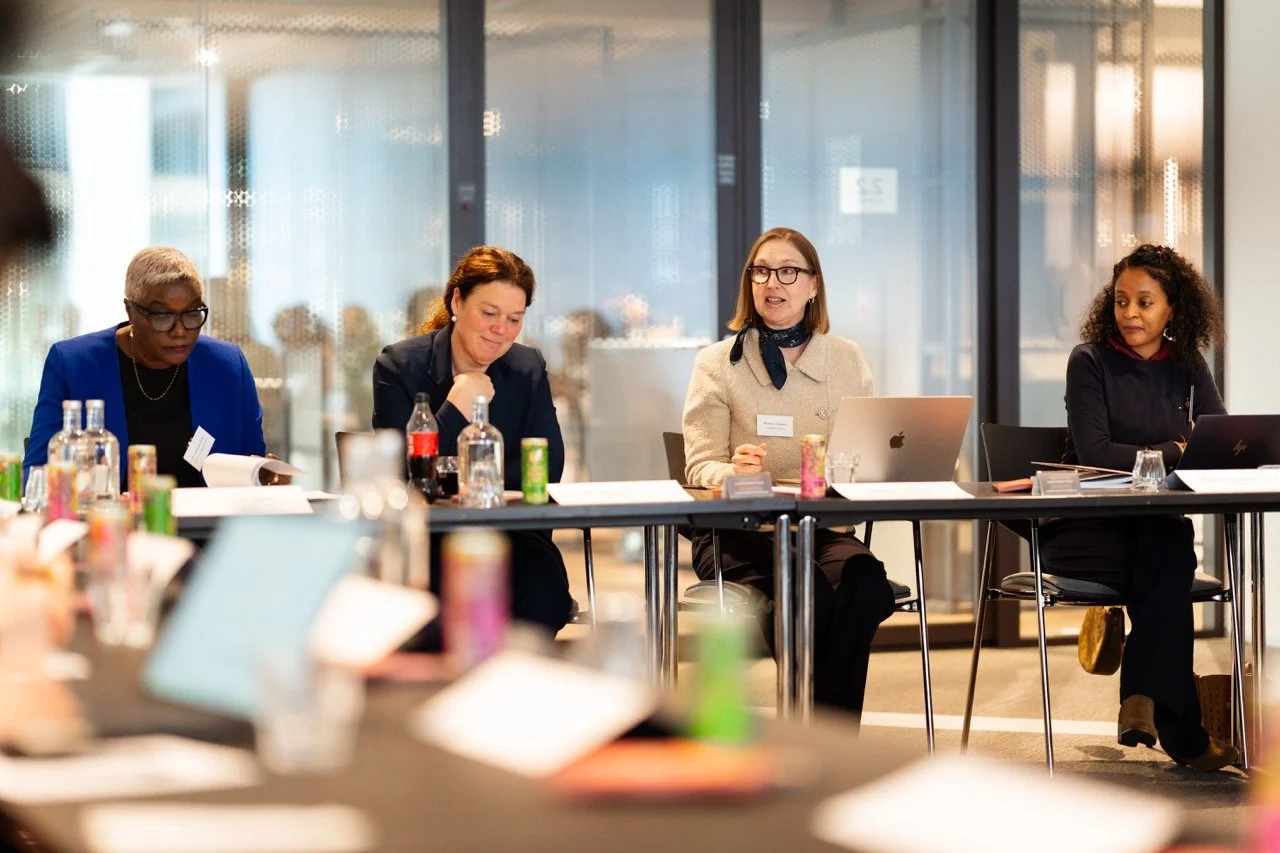
WSME Investment Roundtable | The Hague
At a high-level roundtable convened in The Hague on 31 March 2026, Melanie Hawken, founder and CEO of Lionesses of Africa, delivered a compelling call to action for a shift in how capital is deployed to support women-led small and medium enterprises (WSMEs) across the African continent. Framing the discussion around the theme of smart inclusive investment, she challenged stakeholders to move beyond intent and towards practical, scalable solutions that can unlock sustainable economic growth.
Bringing together investors, policymakers, entrepreneurs, and ecosystem builders, the roundtable built on the momentum of Startup Night Africa 2025—an initiative designed to connect high-growth African women entrepreneurs with international markets, partnerships, and funding opportunities. But as Hawken emphasized, this gathering was not just about continuing a conversation—it was about accelerating action.
Positioning the Netherlands as a strategic bridge between Africa and Europe, Hawken highlighted the country’s strong entrepreneurial ecosystem and longstanding commitment to gender equality as key reasons Lionesses of Africa established its European headquarters there. From this base, the organization has been working to strengthen connections between African entrepreneurs and global capital markets.
At the heart of Hawken’s remarks was a central question: What truly defines a financially smart, effective agent of change in the investment landscape? Her answer pointed not only to the availability of capital, but to the intentionality behind it—how it is structured, who it reaches, and the long-term value it creates.
Drawing on the experience of Lionesses of Africa’s nearly two million-strong network of women entrepreneurs, Hawken underscored a persistent disconnect. While the continent is rich with ambition, innovation, and high-growth potential, access to capital remains a significant barrier. Closing this gap, she argued, is not simply a matter of equity—it is an economic imperative.
“When women entrepreneurs access growth capital, the impact extends far beyond individual businesses,” was the underlying message. These enterprises create jobs, strengthen local economies, and contribute to more inclusive and sustainable development outcomes. In this sense, investing in women-led businesses is not a niche agenda, but a strategic lever for broader economic transformation.
The roundtable’s purpose was therefore clear: to convene key stakeholders and explore practical pathways to increase investment flows into WSMEs, reduce systemic barriers, and identify models that are already delivering results. Importantly, it also aimed to spotlight success stories—entrepreneurs and initiatives that are actively narrowing the gender finance gap and demonstrating what is possible.
Hawken outlined a set of focused objectives for the discussion. First, to reinforce the strategic case for prioritizing investment in women-led enterprises across Africa. Second, to hear targeted insights from across the ecosystem—from policymakers shaping enabling environments, to funders designing financial instruments, to entrepreneurs navigating real-world challenges. Third, to create space for open and honest dialogue, where assumptions could be tested and ideas refined. And finally, to identify tangible partnership opportunities and next steps that could extend beyond the room.
Central to the approach was the format itself. This was not designed as a series of presentations, but as an interactive, solutions-oriented dialogue. Participants were encouraged to engage candidly, share lessons learned, and collaborate across sectors and geographies.
Hawken also reflected on the evolving role of Lionesses of Africa within this ecosystem. While the organization has long focused on building a strong pipeline of investment-ready women entrepreneurs—through capacity development, mentoring, knowledge-sharing, and networking—it is increasingly acting as a convener. By bridging gaps between entrepreneurs and investors, and between African and international markets, it is helping to create the conditions for more effective capital deployment.
This dual focus—on both supply and demand—speaks directly to what Hawken described as “smart investment.” It is not only about identifying promising businesses, but about ensuring that those businesses are visible, prepared, and connected to the right opportunities. At the same time, it requires investors to adopt approaches that are inclusive, responsive, and aligned with long-term impact.
Ultimately, the conversation returned to the broader significance of the moment. If stakeholders can align around smarter, more inclusive investment strategies, the benefits will extend far beyond individual enterprises. Success stories create visibility. Visibility inspires others. And over time, this generates a ripple effect that strengthens entire ecosystems.
In Hawken’s view, the real measure of an effective agent of change lies in this ability to catalyze wider impact—turning individual investments into engines of systemic transformation.
As the roundtable discussions unfolded, one message resonated clearly: unlocking the full potential of Africa’s women entrepreneurs will require more than capital alone. It will demand collaboration, innovation, and a shared commitment to rethinking how investment works.
And if done right, it has the potential to reshape not only the future of women-led businesses, but the trajectory of economic development across the continent.