
Podcast
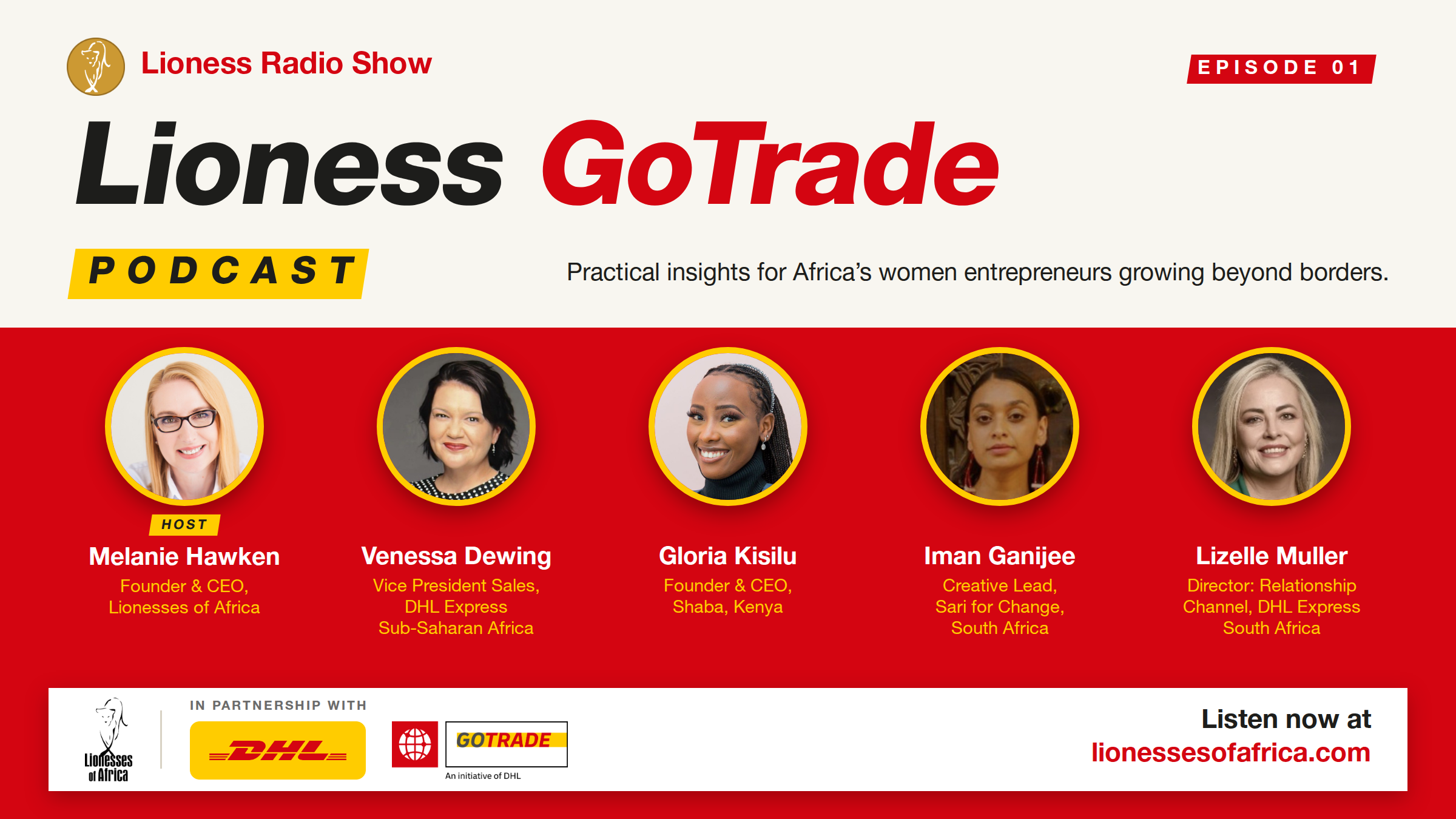
Lionesses of Africa and DHL Express Sub-Saharan Africa launch a new podcast series to help women-owned and women-led SMEs break into new markets through cross-border trade.
Listen to Episode 1 of the Lioness GoTrade Podcast series here:
Ask any woman entrepreneur who has sold her products beyond her borders: making a great product is only half the journey. The other half is knowing which market to target, which paperwork to prepare, how customs duties work, and who to trust to get your goods there on time. That second half is what our new podcast series sets out to demystify.
We are proud to launch the Lioness GoTrade Podcast, a new partnership between Lionesses of Africa and DHL Express Sub-Saharan Africa, in support of DHL’s GoTrade initiative. Hosted by Melanie Hawken, founder and CEO of Lionesses of Africa, the series informs and empowers women-owned and women-led small and medium-sized enterprises (WSMEs) to access new markets through cross-border trade. Each episode pairs women entrepreneurs already trading internationally with DHL specialists, to share practical insights, experiences, tools and learning resources.
“Each episode introduces women entrepreneurs who are successfully growing their businesses into new markets,” says Melanie. “You’ll also hear from the specialists in the DHL Express team, who have a wealth of practical insights, learning resources and tools to share. These are fascinating conversations.”
Why cross-border trade, and why now
For Melanie, the case is simple. “Trade can open doors and create opportunities for everyone, particularly SMEs, which are at the heart of local economies,” she says. “But we also know many struggle to grow beyond their borders.”
GoTrade is DHL’s initiative to help SMEs grow beyond borders. As Venessa Dewing, Vice President Sales for DHL Express Sub-Saharan Africa, explains in our first episode, it works on two fronts: As the world’s most global corporate citizen, it works with different parties to advocate for trade, including governments, customs authorities and bodies such as the World Trade Organization to break down barriers to trade; and building the capacity of SMEs to trade with confidence. Since 2021, GoTrade has reached more than 13,000 SMEs, including 4,000 women-owned businesses, in over 50 countries.
For our Lionesses of Africa community of over 2 million women entrepreneurs across Africa and the diaspora, the timing matters. Conflict is disrupting shipping routes, tariffs are shifting, and this is compounding the existing challenges SMEs face when trying to grow into new markets. Yet global demand for African-made products keeps growing. Venessa sees trends in buyers seeking out clothing, jewellery and cosmetics, and, increasingly, small batches of tea, coffee and raw shea butter. “They’re ordinarily prepared to pay a premium for the products from our countries because they are high quality and they’re often quite bespoke,” she says.
Inside episode one
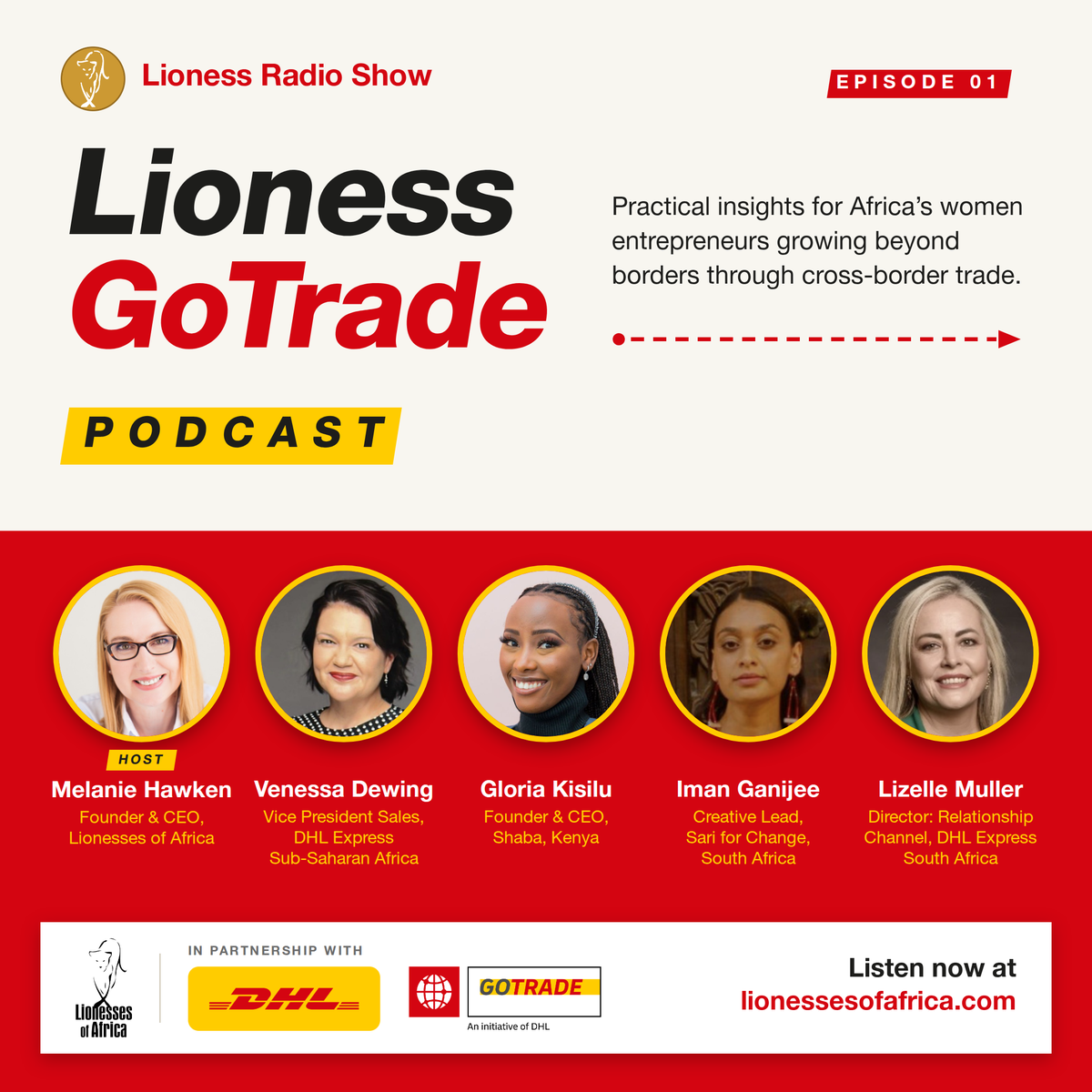
Our launch episode features four remarkable women, each with a different view and experience of cross-border trade.
Venessa Dewing, Vice President Sales for DHL Express Sub-Saharan Africa, shares one of her fondest memories as part of the conversation: overhearing two clothing entrepreneurs in Kigali swapping details of a reliable, well-priced zip supplier. “SMEs don’t necessarily compete, but they really do cooperate, and they’re very open to collaboration,” she reflects. It is a spirit we know well at Lionesses of Africa, where we say we go ‘further together’.
Melanie explains why it matters so much: “As individual women entrepreneurs, it can be really tough out there. But if you are collaborating, learning and connecting with other women entrepreneurs as well as your key strategic partners, it makes the journey so much easier.”
Gloria Kisilu, founder of Shaba in Kenya, built her business in honour of her grandmother, a basket weaver who never received the full value of her craft. Today Shaba works with more than 350 rural artisans and exports to the EU and the US. Of the 20 or so women entrepreneurs she started out alongside in 2021, Gloria is the only one still trading, a result she credits to embracing technology early. Through the DHL GoTrade Fellowship she learned about HS codes and certificates of origin. DHL’s support even shaped her pricing: Shaba set its minimum order quantities around the DHL box size, cutting shipping costs. Her next goal is to double the number of artisans Shaba works with within two years.
Iman Ganijee, Creative Lead at Sari for Change in South Africa, helps run a sustainable fashion brand that upcycles saris into one-of-a-kind garments. The business has trained more than 120 women, saved 15,000 saris from landfill and created 8,000 unique pieces, and it now sells in Italy, Sweden and Denmark. Iman explains how the brand adapts to each market, from the Amani Puffer, which blends the East African kanga with the Maasai blanket for Kenyan buyers, to softer palettes and a minimal aesthetic for Scandinavia. Her advice: don’t try to appeal to everyone. “People don’t only buy garments anymore. They buy into the story, the meaning, craftsmanship and the values.” On working with DHL, she adds: “Partnering with DHL almost became a stamp of approval or credibility marker when trading in different regions.”
Lizelle Muller, Director: Relationship Channel at DHL Express South Africa, closes the episode with the practical detail every exporter needs.
Three lessons to take into your business
Lizelle leaves listeners with three clear pieces of advice for WSMEs with pan-African and global ambitions:
Prepare first. Understand regulations, logistics, customer preferences and pricing before you ship. The DHL Go Trade and Grow Beyond Borders online programme offers 13 self-paced online modules: modules 1 to 8 cover logistics, customs and compliance, and modules 9 to 13 cover the business skills needed to export. Each takes one to three hours.
Think regionally before globally. For many African SMEs, trading across the continent is a powerful first step, and the African Continental Free Trade Area is making it easier. Gloria agrees: it is often cheaper for her to ship across an African border than to Europe.
Leverage partnerships and networks. No one expands internationally alone. Experienced logistics partners, trade organisations, and peer networks dramatically reduce the barriers. As Melanie puts it: “Any business builder, any SME knows that you have to have the right partners on board if you are truly going to grow. You can’t ever do this alone.”
“If you take the time to learn the basic skills and knowledge around export and international trade, you’ll find that it’s actually quite simple,” says Lizelle.
Listen now
Episode one of the Lioness GoTrade Podcast is available now. Listen to the full episode here
Then take the next step:
Sign up for the DHL Go Trade and Grow Beyond Borders online programme
Share this episode with a fellow Lioness who is ready to grow beyond borders
A word from our host
“One of the things we hear most from our community is how to navigate the world of getting your products and services to global markets, which is so important if you want to grow,” says Melanie Hawken. “These conversations are packed with practical answers, from women who are already doing it and from the DHL specialists who support them. Listen, and share them with a fellow Lioness who is ready to grow beyond borders.”
Look out for episode two, with more women entrepreneurs putting cross-border trade to work. Because when we share what we know, we all go further together.