Lioness Lean In Event Report
At the third Lioness Lean In Mozambique of 2026, held at Standard Bank’s Head Office in Maputo and also streamed live, women entrepreneurs shared how they are building businesses from the ocean, the coast and the water around them, and what they need to grow.
Event at a glance
73 women entrepreneurs and guests in the room
146 online registrations from six countries
6 founders on stage
9 women-led brands in the marketplace
On the morning of Wednesday 30 September 2026, more than 70 women entrepreneurs filled the multi-purpose room at Standard Bank’s Head Office in Maputo. Another 146 people registered to follow online from Mozambique, South Africa, the Netherlands, Angola, Brazil and Malawi. Outside, under a row of blue tents, nine women-led brands laid out a selection of products including natural soaps, piri-piri sauces and herbal teas for the day’s buyers.
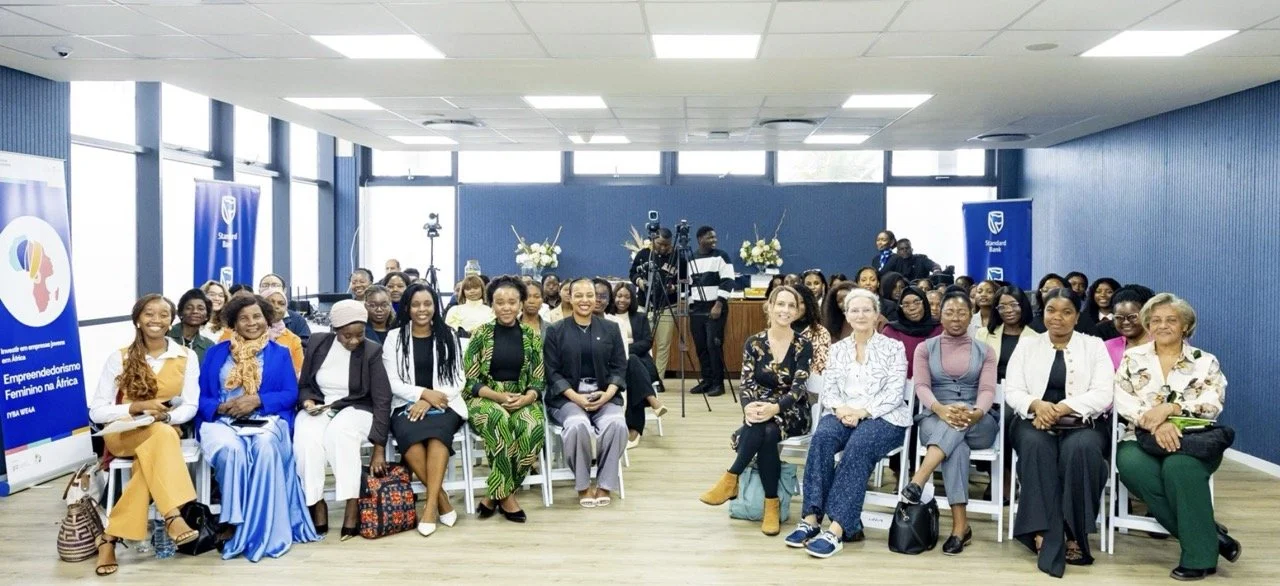
A full room at Standard Bank’s Head Office, Maputo, for Lioness Lean in Mozambique on 30 September 2026
The theme was Women Entrepreneurs in the Blue Economy. Mozambique has one of the longest coastlines in Africa, and its ocean, rivers and coast already feed and employ thousands of families. Fisheries, aquaculture, seaweed farming, coastal tourism and ocean-based recycling are among the country’s biggest opportunities for sustainable growth, yet women remain under-represented in most of them. This edition of Lioness Lean In, run by Lionesses of Africa with our impact partner Standard Bank Moçambique and supported by GIZ, put the women already building in this space centre stage.
Opening the event by video, Melanie Hawken, Lionesses of Africa Founder & CEO, asked every woman in the room to treat the day as her moment to share, inspire and connect, saying:
“Get seen, get noticed and lead the way. Raise your voice, share your story and let everyone know what you are building.”
Erica Noormahomed, Head of the Business Incubator at Standard Bank Moçambique, set the tone for the morning.
“The real value is not only in what we can take from the sea. It is in what we can build from it.”
She reminded attendees that, for the bank, supporting entrepreneurship is an investment in Mozambique’s future, and that an inclusive, innovative and sustainable economy has to keep women at its centre.
Speaking on behalf of German Development Cooperation, Claudia Tietze of the Embassy of the Federal Republic of Germany noted that Mozambique and Germany are marking 50 years of diplomatic relations and 40 years of cooperation. “There is no sustainable development without the strong and meaningful participation of women,” she said. “When women entrepreneurs have access to networks, knowledge and financing, the businesses they create benefit not only their families but their whole communities.”
Our MC, Chanila Saide, then gave the morning its rallying cry: “Today, in this room, we are the voice of the women who are not here.”
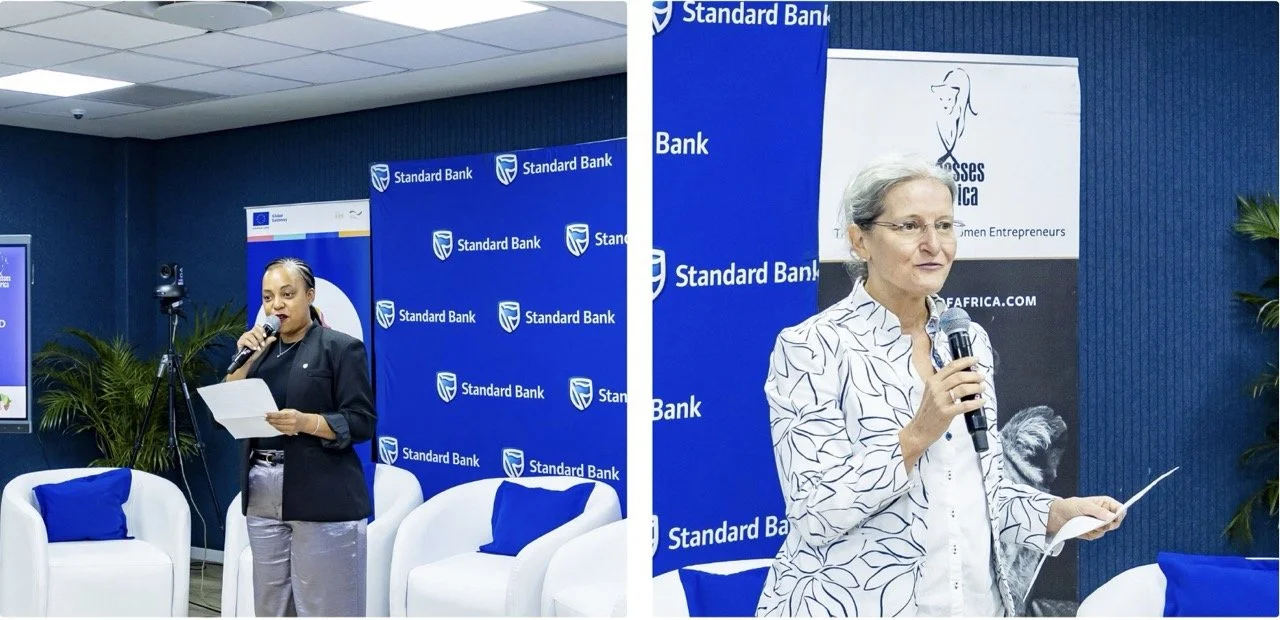
Left: Erica Noormahomed, Standard Bank Moçambique. Right: Claudia Tietze, Embassy of the Federal Republic of Germany.
Lioness Launch: two founders, two very different starting points
The Lioness Launch Open Mic gives early-stage founders a few minutes to pitch to the room. First up was Rhulany Cossa, a marine biologist and founder of PhycoGlow, a young Mozambican start-up that turns seaweed cultivated on Inhaca Island into soaps. The seaweed project began as a way to give island communities a livelihood beyond fishing.
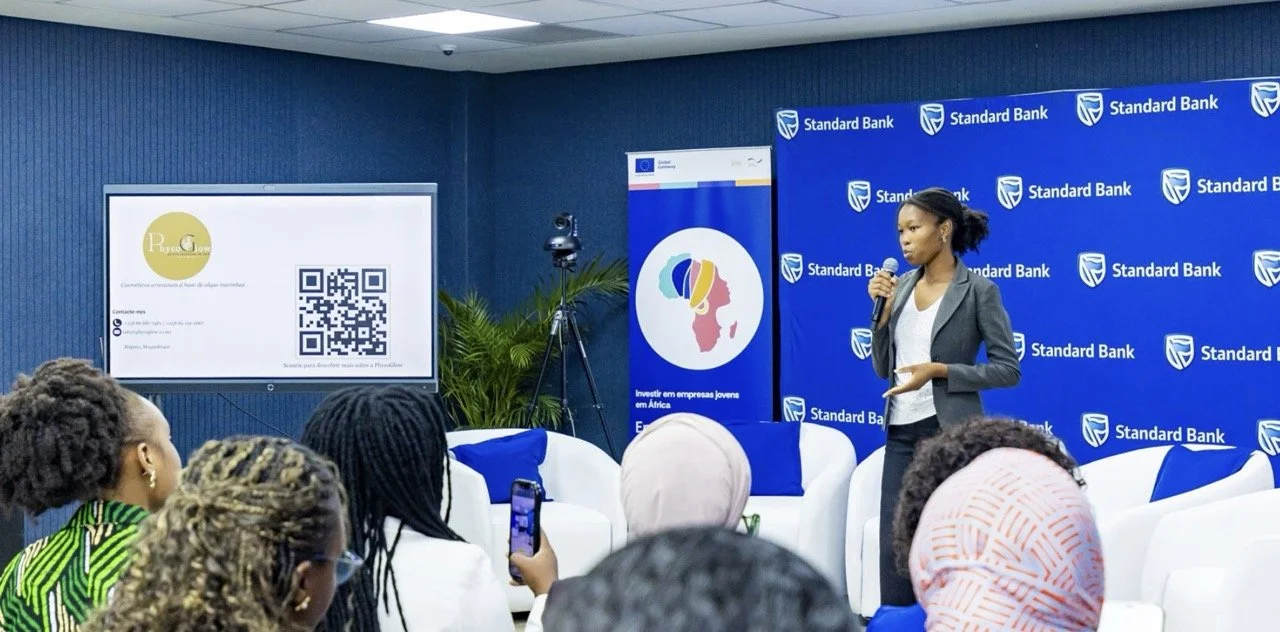
Rhulany Cossa of PhycoGlow pitches at the Lioness Launch Open Mic.
“It is biomass that is already there. It does not disturb the ecosystem and it is sustainable, so we can make good use of it.”
Rhulany wants to keep production artisanal while she grows, and she was clear about what would help: finance to expand, certification so that buyers trust her products, and partners.
Next came Lucia Machaila, a fish farmer from Moamba Block II whom the MC introduced, to warm applause, as “Mãe Lúcia”. She dug her first ponds in 2016, stocked 28,000 tilapia across four tanks and harvested about seven tonnes, exhibiting a full tonne of fish at FACIM. Selling it all was harder. “The sales weren’t very effective, because I didn’t yet know how to sell,” she admitted. Floods have since brought catfish into her ponds, and she has no instruments to check her fish for disease.
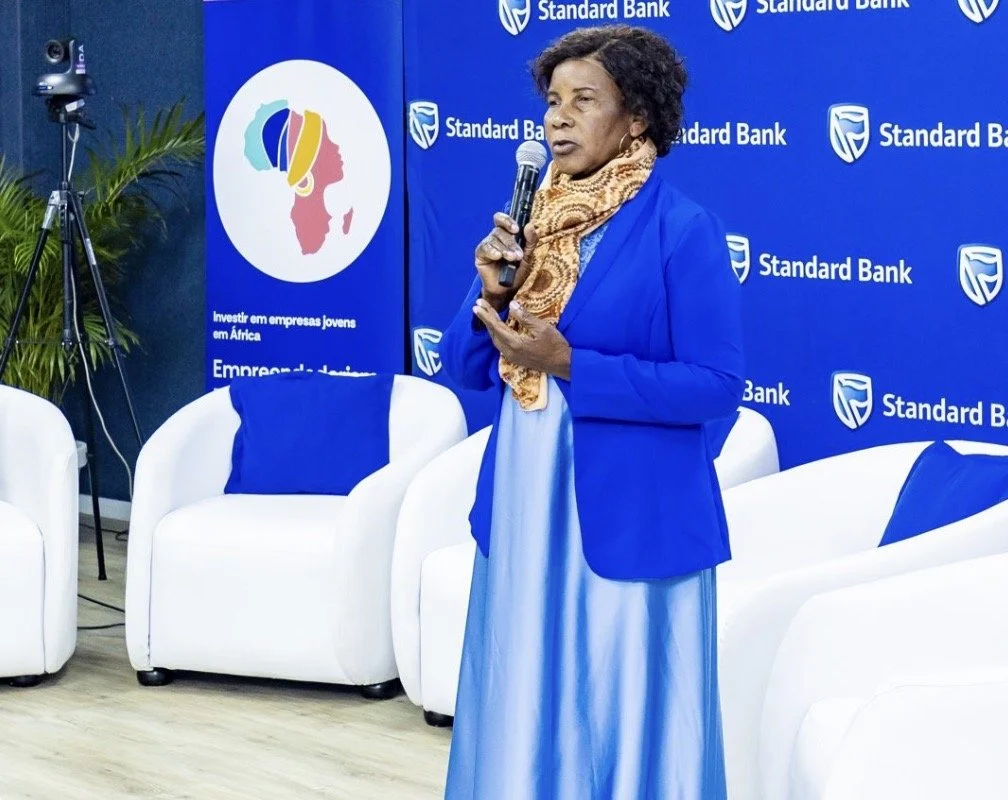
Lucia Machaila shares her journey as a small-scale fish farmer.
“As a woman, I often need training. Small fish farmers like me would like to take part in events like this, and capacity building would make a real difference.”
Lessons from the farm: build with what you have
Carla Mariza Reis Esculudes named her farm Quinta Irini (irini means “peace” in Greek, the language of her ancestors). She farmed for years before aquaculture found her. To irrigate her crops, she, together with three other women and one man, dug a ten-by-ten-metre tank by hand over three months. She stocked it with fish, and the water now fertilises her organic vegetable gardens. With no fish feed on sale locally, she made her own from very ripe bananas, vegetable scraps, bran and the coconut and bean left over from her mother’s restaurant. She dried it in the sun and found, to her delight, that it floated. She has since built four ferro-cement tanks with her own team and plans eight more so that she can harvest every month. Her 7.5-hectare farm also produces honey, mushrooms, quail eggs, jams, liqueurs and essential oils.
Rukssana Saide’s Dream Agrobusiness Company is celebrating ten years as a women-led business. It grows maize and soy for poultry and fish feed and supports 80,000 smallholder producers in Niassa, including a project designed exclusively for 30,000 women and young people. Families rotate grain, vegetables and fish ponds, and the pond water irrigates the gardens. Dream Agrobusiness Company is now building a processing plant.
Her advice on finance was frank: investors need to see organisation, scale and good agricultural practice, and reaching the funder behind her new plant took almost ten years. “We built a company to answer a problem in society,” she said. “We didn’t build it for ourselves.”
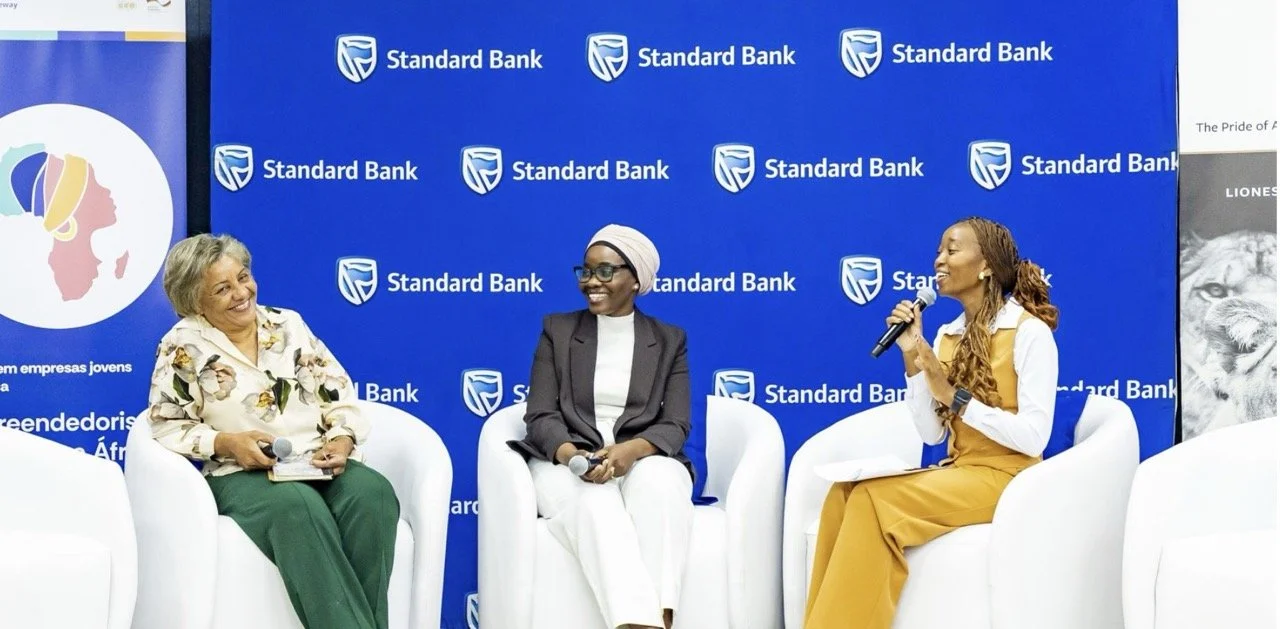
Carla Mariza Reis Esculudes (left) and Rukssana Saide (centre) in conversation with MC Chanila Saide
Oceanising minds: the Blue Economy panel
Marine biologist Madalena Duarte noticed that every conference she attended talked about green. “And what about blue?” she asked herself. Her answer was Associação O Meu Oceano (AOMO), which started with ocean-literacy clubs in schools and now runs two ventures: Refish, which turns fish waste into feed and bio-oil, and Coco Circular in Quelimane, where women collect discarded coconut husks to make charcoal and baskets and bicycle-taxi drivers carry the products to market.
“Our initiative is about ‘oceanising’ people’s minds, and oceanising education too.”
Ecologist Vânia Gonçalo Nhauando, founder of Gonzart, started out customising flip-flops by hand. A place on the MUVA accelerator in 2020 pushed her to build on her training, first making furniture from old tyres and now recycling plastics, tyres and soles collected along the coast into school desks. Each desk uses up to 16 kilograms of plastic. Gonzart buys from waste pickers and trains them, and it has trained 325 women in green business skills.
“If I started by turning a plastic bottle into a vase, more women can transform what they have around them with their own hands.”
Both panellists were honest about money. Funding for young women in the circular economy, Vânia said, is “still timid”. Madalena’s answer was not to wait for it: her charcoal and bio-oil are still made by hand, without industrial machinery. “It was me and an idea,” she said. “Today it is me, 300 children trained and 30 women benefiting.”
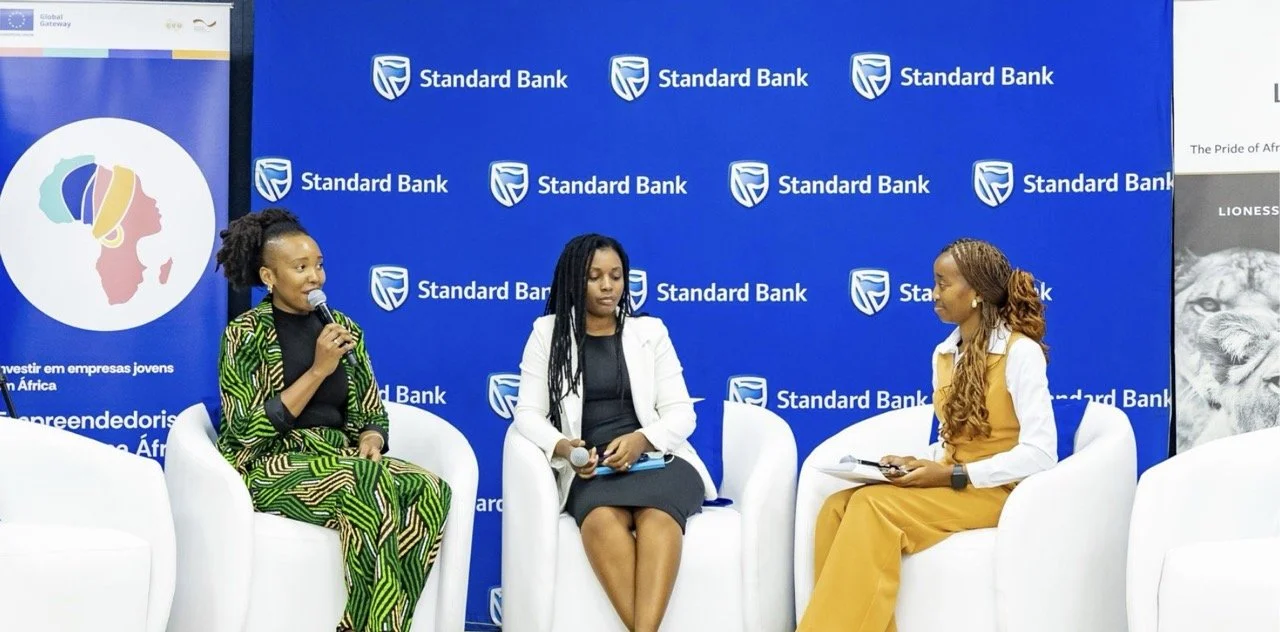
The Blue Economy panel: Madalena Duarte (left) and Vânia Gonçalo Nhauando (centre) with MC Chanila Saide
The questions in the room
The Q&A was lively. A management-systems consultant asked which certifications buyers and funders really expect. Rukssana’s answer: the market you want to enter sets the rules, and the process takes time, two years and counting in Dream’s case. Online viewers asked about coconut-waste collection, teaching children to separate rubbish at school, and how founders will cope with a severe El Niño. Madalena and Vânia agreed that climate shocks now have to be built into every business plan.
One participant made a plea that drew applause: Mozambique’s women are doing remarkable things, and what they need most is visibility. “After this session, let’s go on social media and make some noise for each other.”
The most memorable moment came when Erica Noormahomed took the microphone herself to ask how much land and capital she would need to start a small fish tank of her own. Lucia was delighted: “Well, at least I have a customer!” She promised practical lessons.
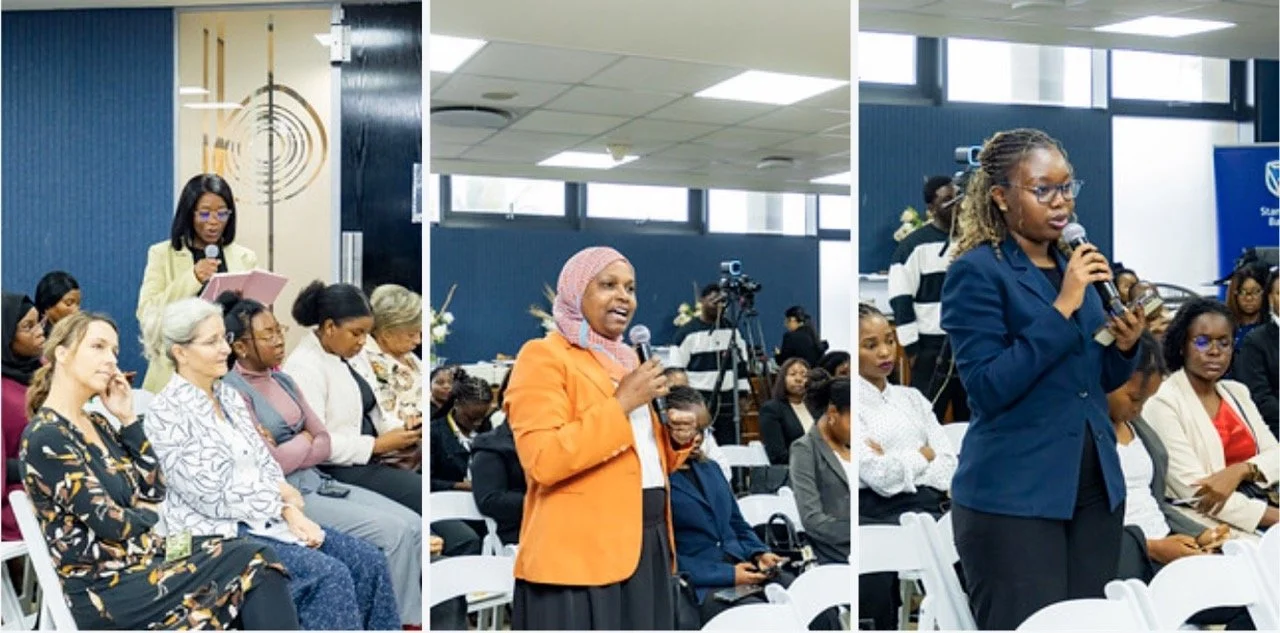
Questions from the floor during the audience Q&A
What the room told us
Participants answered a short live poll on their phones at the start of the morning. Twenty-seven responded, and the results were shared before the close.
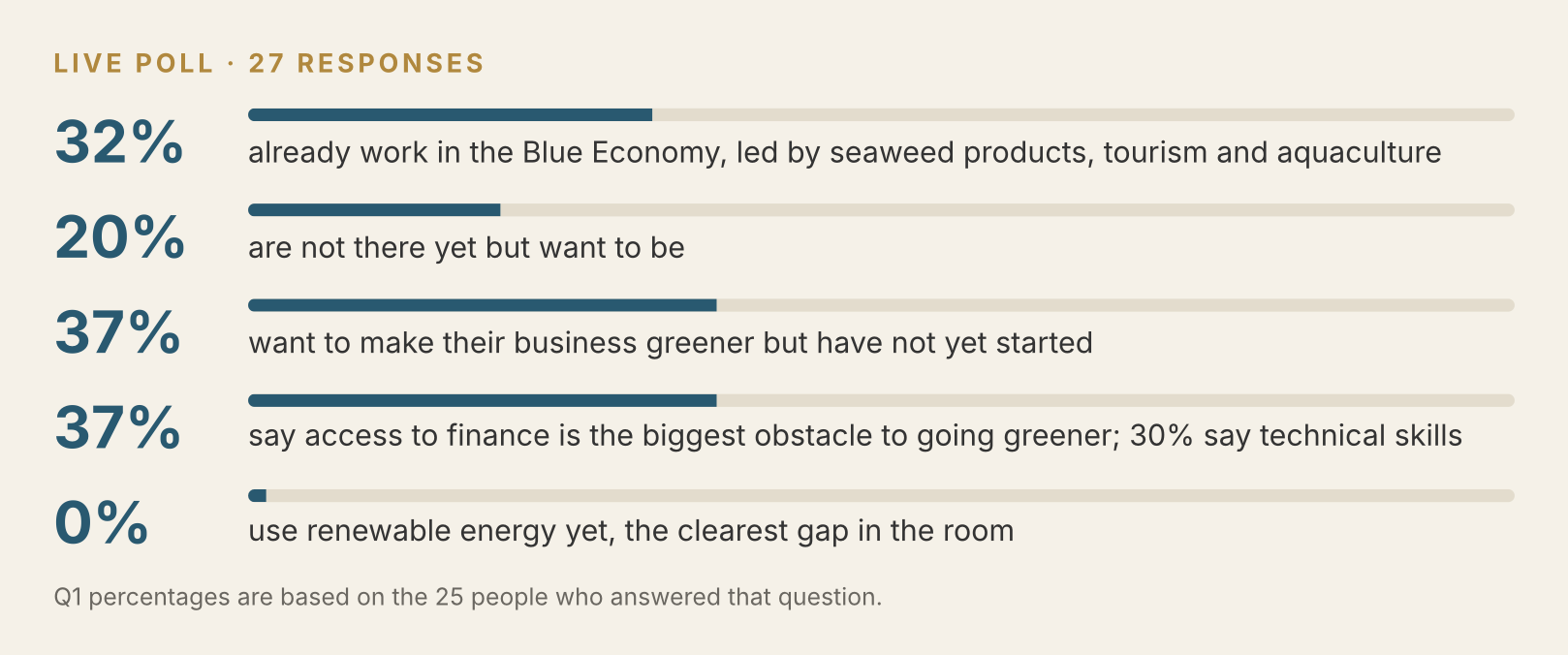
The barriers are the same as at our June event on green businesses: finance and skills. That is exactly where partners such as Standard Bank and GIZ can make the biggest difference, and where we will focus our next edition.
Five takeaways for women building in the Blue Economy
Start with what is around you. Carla’s fish feed came from kitchen scraps. Madalena’s charcoal comes from coconut husks other people throw away.
Don’t wait for the machine. Prototype by hand, prove the idea, and the investment can follow.
Know your numbers before you pitch. Vânia’s advice: understand what it will cost to get where you want to go.
Let your market choose your certification. Decide where you want to sell first, then work back to the standards that market demands.
Make noise for each other. Share, tag and buy from the women in your network. Visibility is a form of support.
Shop the Lioness marketplace
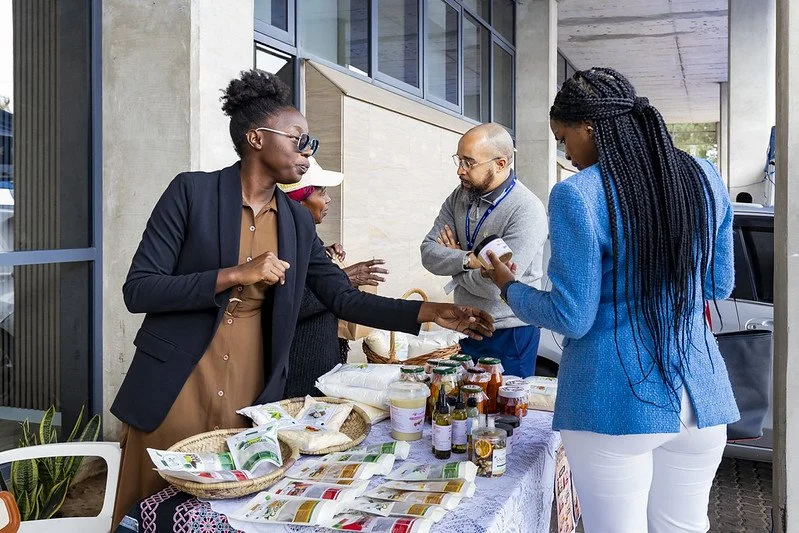
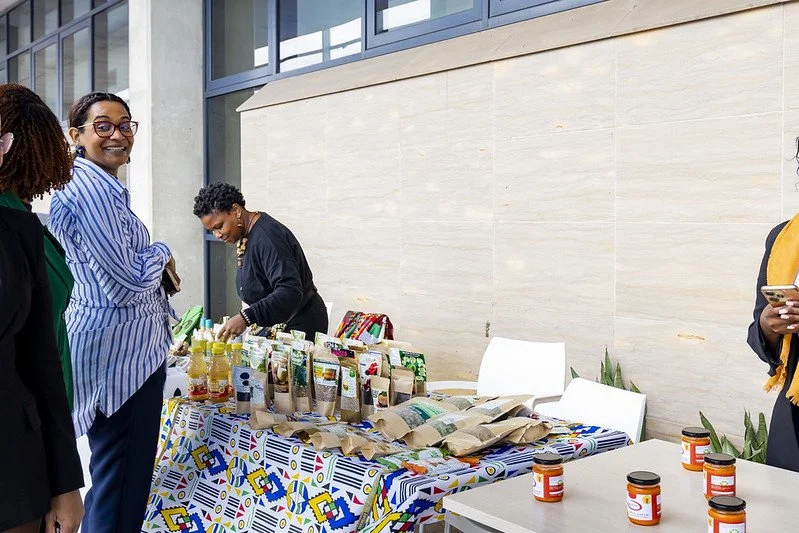
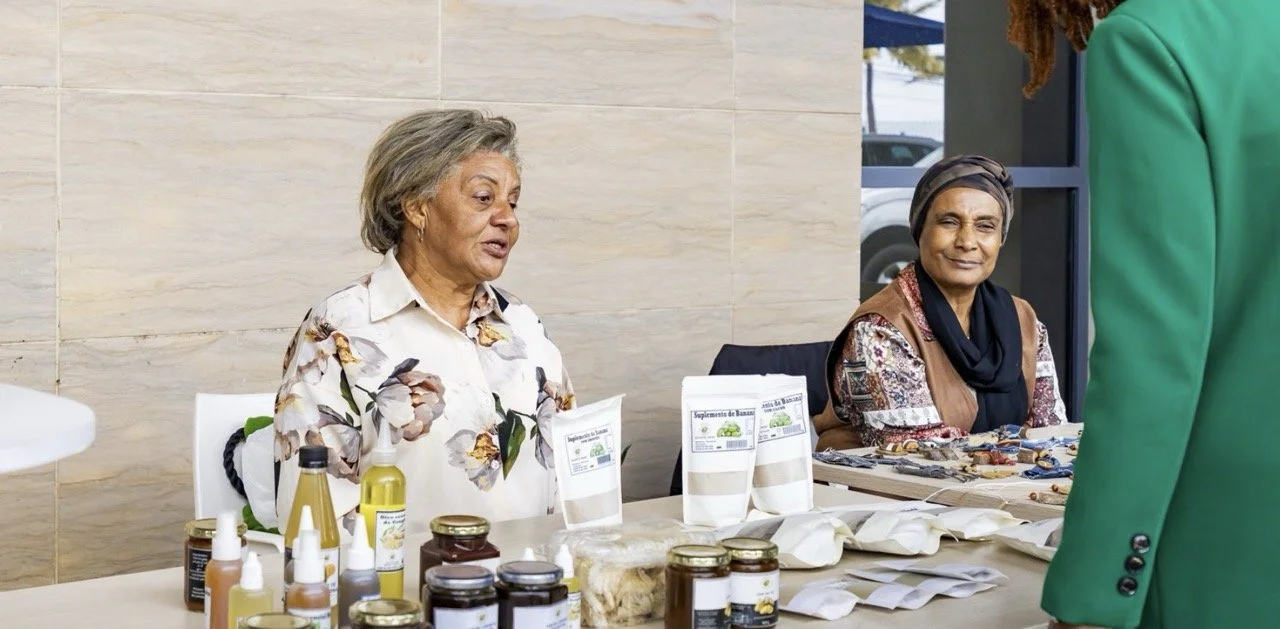
Exhibitors met buyers, bank staff and attendees in the marketplace outside the Head Office.
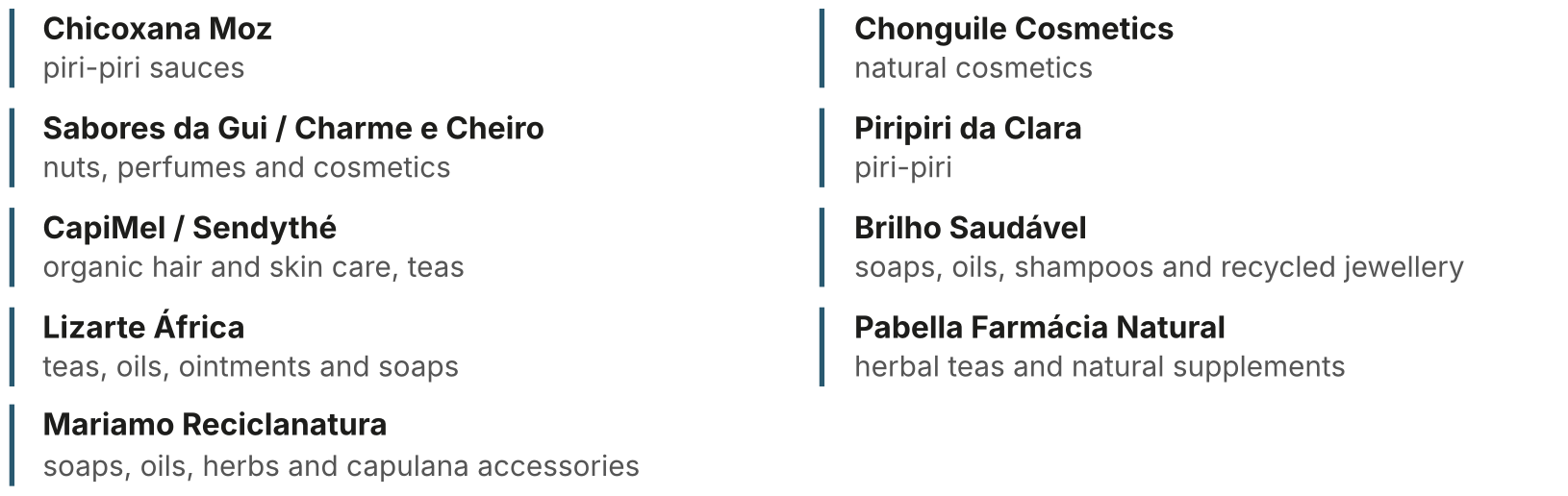
Nine women-led businesses from the Lionesses of Africa and Standard Bank Incubator communities exhibited, every one of them returning from our June event. Look them up, and buy from them:
Keep learning, keep connecting
Closing the programme, Ana Charles of the Standard Bank Business Incubator introduced Empreenda, a free online learning platform created by Standard Bank with GIZ. It offers practical courses in entrepreneurship and financial literacy designed for Mozambique.
Get involved
Learn for free: Sign up to Empreenda: empreenda.standardbank.co.mz
Share your story: Are you building in the Blue Economy? Submit your startup story to Lionesses of Africa.
Join the next event: Lioness Lean In Mozambique returns for its fourth and final event of 2026 - diarise the date of 3 December 2026
Make some noise: Share this article and tag the founders and exhibitors. #LionessLeanIn #LionessesOfAfrica
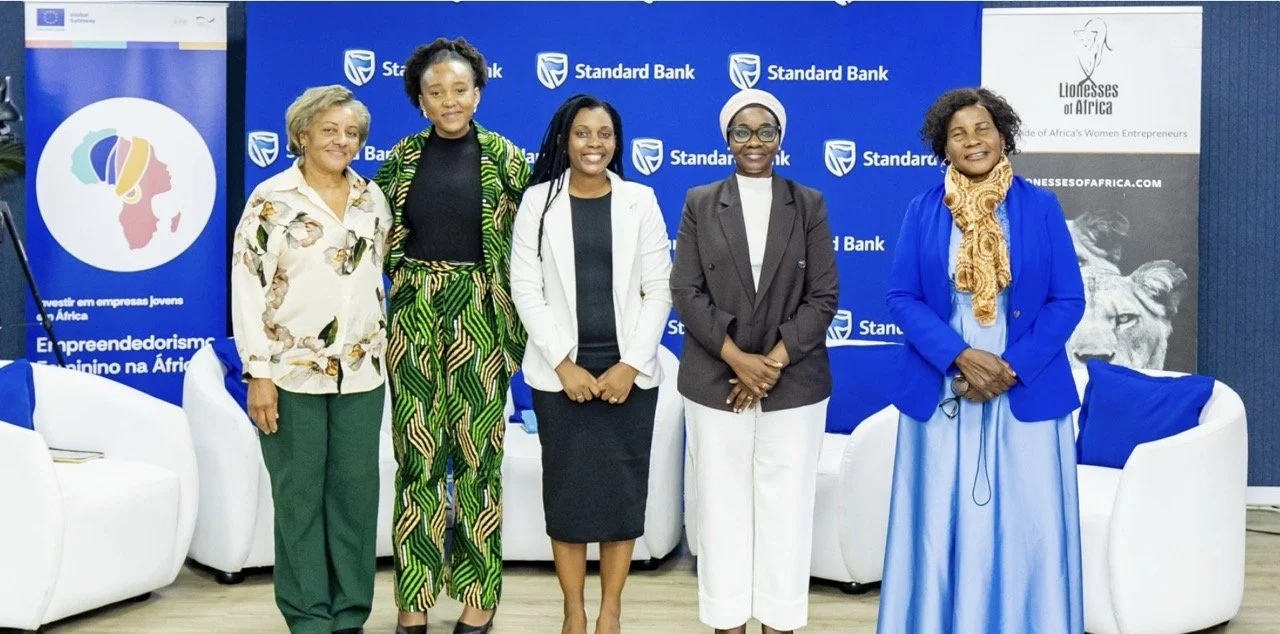
The founders who shared their journeys (left to right): Carla Mariza Reis Esculudes, Vânia Gonçalo Nhauando, Madalena Duarte, Rukssana Saide and Lucia Machaila.
Thank you to our impact partner Standard Bank Moçambique, to GIZ and German Development Cooperation, to the Embassy of the Federal Republic of Germany, and to every speaker, exhibitor and participant, in the room and online, who made this third Lioness Lean In Mozambique of 2026 such an energising morning. As the room chanted for the camera at the end: Leoas!
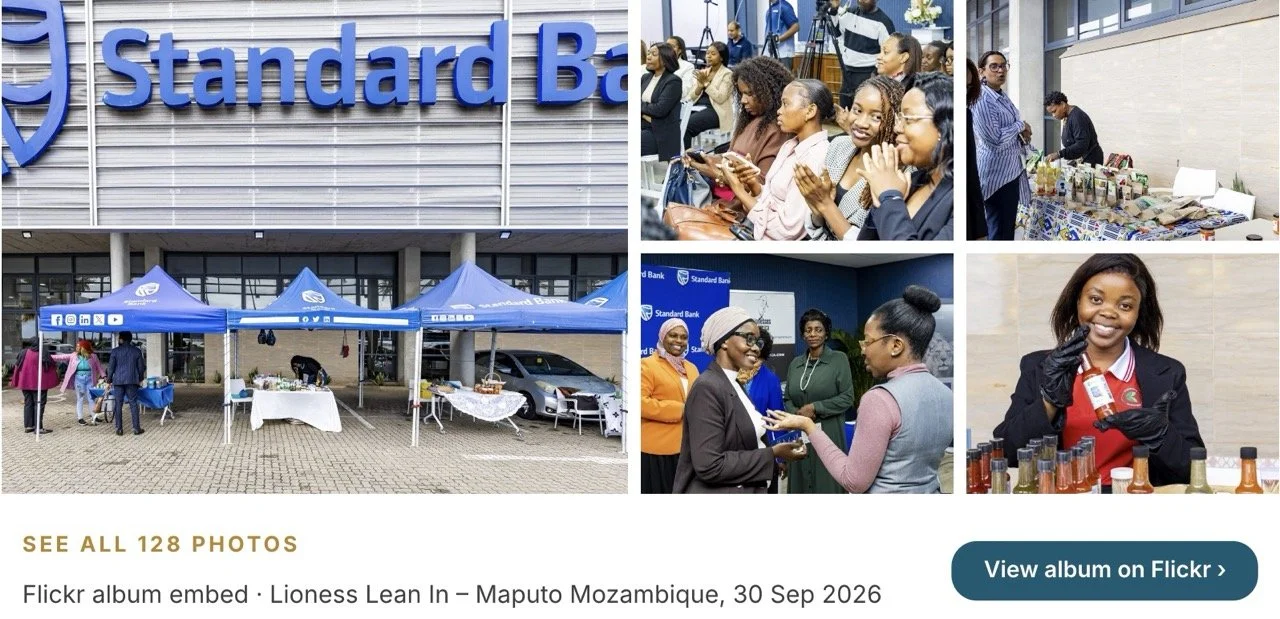
SEE ALL 128 EVENT PHOTOS
Browse the full album from the day on our Flickr gallery.