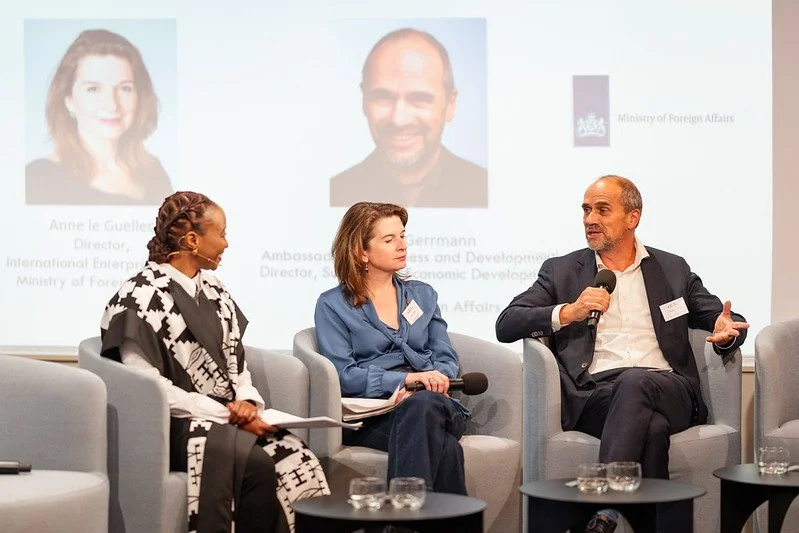
Insights from the Fireside Chat at Start-Up Night Africa, The Hague — 17 September 2025, organised by Lionesses of Africa, with the support of the Ministry of Foreign Affairs, Kingdom of the Netherlands
At a moment when global growth strategies are being redefined, the conversation at Start-Up Night Africa in The Hague on 17 September 2025 cut through the noise with unusual clarity: supporting women entrepreneurs is no longer a side agenda—it is central to economic transformation. In a candid fireside chat, Anne le Guellec, Director of the International Enterprise Department, and Marchel Gerrmann, Ambassador for Business and Development, offered more than policy talking points. They articulated a shift in how governments, ecosystems, and investors must think about growth, partnership, and opportunity—particularly between Africa and Europe.
The Economic Case Is Settled—Execution Is Not
For years, the argument for investing in women entrepreneurs has been framed as a moral imperative. That narrative is now insufficient. As Marchel Gerrmann put it, “it’s not just the right thing to do, it is also the wise thing to do.” The data is compelling: closing the gender financing gap could grow Africa’s economy by 10% to 30%. This reframes women’s entrepreneurship from a social issue into a macroeconomic strategy. And yet, despite the clarity of the opportunity, execution remains uneven. The real challenge now is not why to act—but how to act at scale.
Growth Requires Diversity—And Intentional Design
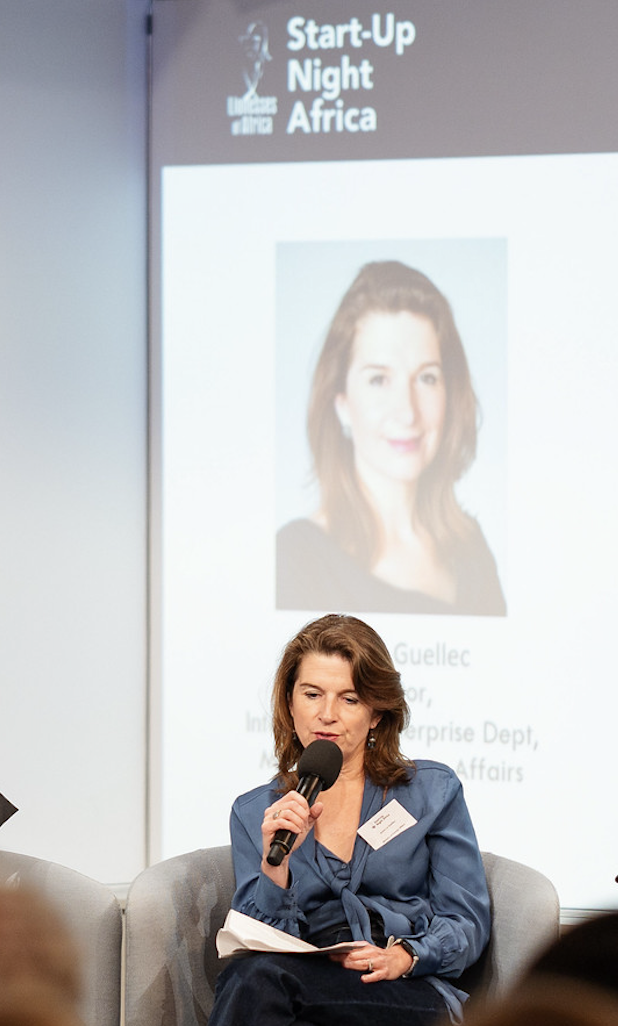
Anne le Guellec, Director of the International Enterprise Department, Ministry of Foreign Affairs, Kingdom of the Netherlands
Anne le Guellec brought a sharp lens to this question: “If you want to grow, you need diversity. If you want to grow, you need women.” This is not simply about representation. It is about performance. Evidence consistently shows that women-led companies deliver stronger financial results and demonstrate greater resilience in decision-making. But here lies the tension: most financial systems, support programs, and networks were not originally designed with women in mind.
Le Guellec acknowledged this gap directly. Many existing instruments are technically open to women—but not practically accessible. The response? A shift toward tailor-made interventions:
Dedicated networking platforms that move beyond social connection to business development
Intentional visibility of women as role models
Curated access to international investors and markets
This signals an important evolution—from inclusion as an afterthought to designing for inclusion from the outset.
From Policy Silos to Integrated Market Development
One of the most strategic insights from the discussion was the importance of breaking down institutional silos. At first glance, the mandates of the two speakers appear distinct: one focused on supporting Dutch enterprise abroad, the other on sustainable development in emerging markets. But the conversation revealed a more integrated reality. Gerrmann described a market development approach that strengthens entire ecosystems—through access to finance, infrastructure, skills, and reduced trade barriers. Within this framework, women entrepreneurs are not a niche segment; they are a critical lever for unlocking broader market potential.
This is where Africa–Europe collaboration becomes particularly powerful. Growing African markets creates opportunities for partnership with European businesses, leading to what Gerrmann described as “true win-win partnerships.”
The implication is clear: development and trade are no longer separate agendas—they are mutually reinforcing strategies.
What the Field Is Teaching Us
Beyond policy frameworks, the most compelling insights came from lived experience. Gerrmann’s early work in Kenya revealed a powerful truth: women entrepreneurs in microcredit programs demonstrated nearly 100% repayment rates, while reinvesting their earnings into their families and communities. The ripple effect extended far beyond individual businesses. Similarly, his encounter with a female electromechanical entrepreneur building a growth business in Mali challenged persistent stereotypes: “talent and performance don’t have a gender.”
Le Guellec’s experience in Mexico reinforced another critical dimension—resilience. Women market traders in Oaxaca, facing the loss of water access that threatened their livelihoods, mobilized, partnered with international actors, and ultimately restored their businesses through a Dutch water solution. These stories are not outliers. They are signals of a broader pattern: when women are supported, the impact compounds—economically and socially.
The Gender Lens Is Becoming Operational
What distinguishes current efforts from past commitments is the increasing operationalization of the gender lens. Gerrmann highlighted how this lens is now embedded across programs and partnerships, requiring explicit assessment of how interventions impact different genders. This approach is being applied across a wide ecosystem of institutions—from development banks to investment funds.
A flagship example is the African Development Bank’s AFAWA initiative, targeting a $5 billion reduction in the financing gap for women entrepreneurs by 2026. At the same time, new models are emerging at the national level. The Netherlands’ Code V initiative—a public–private partnership involving government and financial institutions—demonstrates how capital gaps can be addressed through coordinated action. These efforts mark a shift from high-level commitments to structured, measurable interventions.
Collaboration as a Strategic Discipline
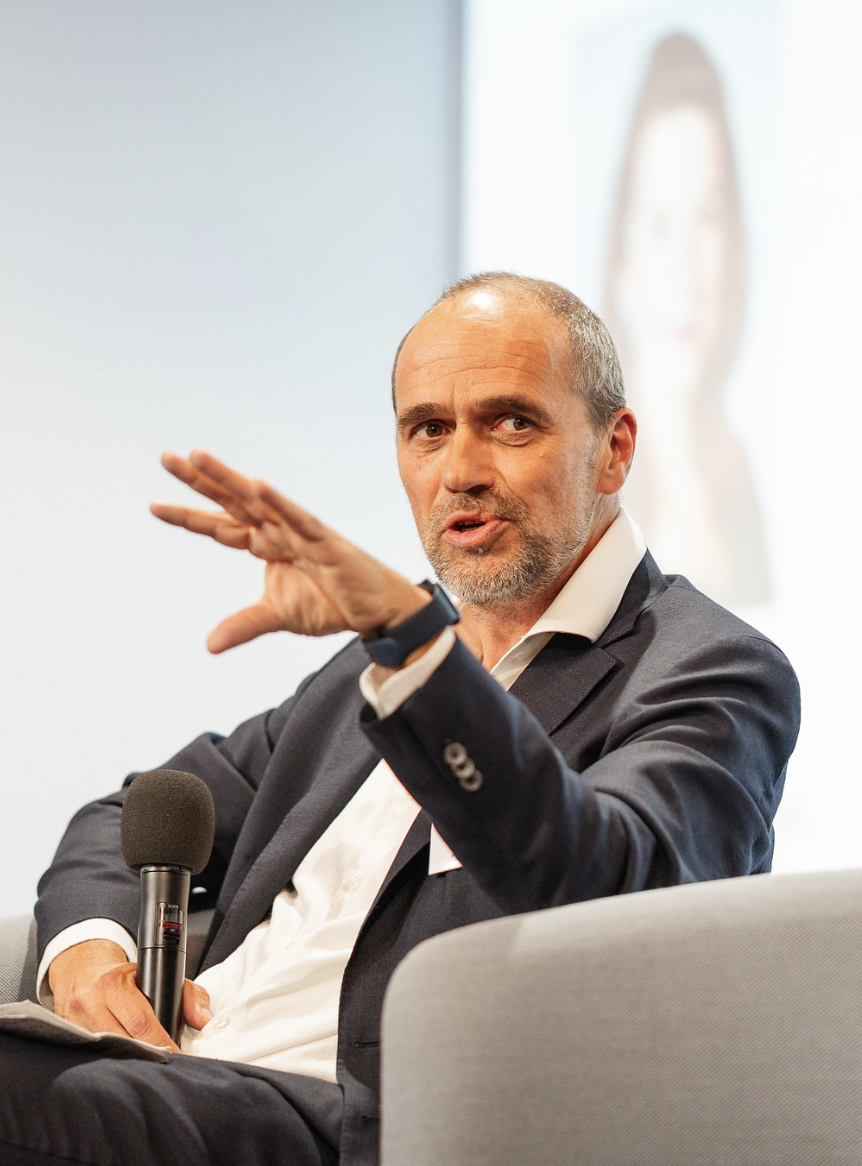
Marchel Gerrmann, Ambassador for Business and Development, Ministry of Foreign Affairs, Kingdom of the Netherlands
If there was one theme that anchored the conversation, it was collaboration—not as a buzzword, but as a deliberate strategy. Gerrmann described “Combi Tracks” operating across 14 countries, bringing together entrepreneurs, governments, and knowledge institutions in sector-specific partnerships. In Kenya, for example, collaboration in health and life sciences is creating new pathways for innovation—particularly relevant for women-led enterprises.
Le Guellec pointed to the importance of public–private partnerships in unlocking both capital and networks—areas where governments alone cannot deliver. The key insight here is that collaboration must be intentional, structured, and outcome-driven. Informal alignment is no longer sufficient to address systemic challenges like the gender financing gap.
A Shift in Mindset—and Momentum
Perhaps the most striking aspect of the fireside chat was its tone. There was little sense of hesitation or uncertainty. Instead, both speakers conveyed momentum—grounded in real programs, real partnerships, and real results.
They also emphasized something often overlooked in policy conversations: the importance of listening. Gerrmann’s closing reflection—that he was there “to learn from these wonderful entrepreneurs”—signals a shift in power dynamics. Entrepreneurs are not just beneficiaries of policy; they are informants of it.
The Way Forward
The message from Startup Night Africa is both simple and profound:
The economic case for investing in women entrepreneurs is undeniable
The tools and frameworks to act are increasingly available
The missing ingredient is scale, speed, and sustained collaboration
Start-Up Night Africa is more than an event—it is a catalyst. A space where policymakers, entrepreneurs, and investors converge not just to exchange ideas, but to align action.
As global economies search for new engines of growth, one thing is becoming clear: those who invest in women entrepreneurs—intentionally and at scale—will not only drive inclusion, they will drive the future of growth itself.