
Cover Feature / Jules Ngankam, Group CEO, African Guarantee Fund (AGF)
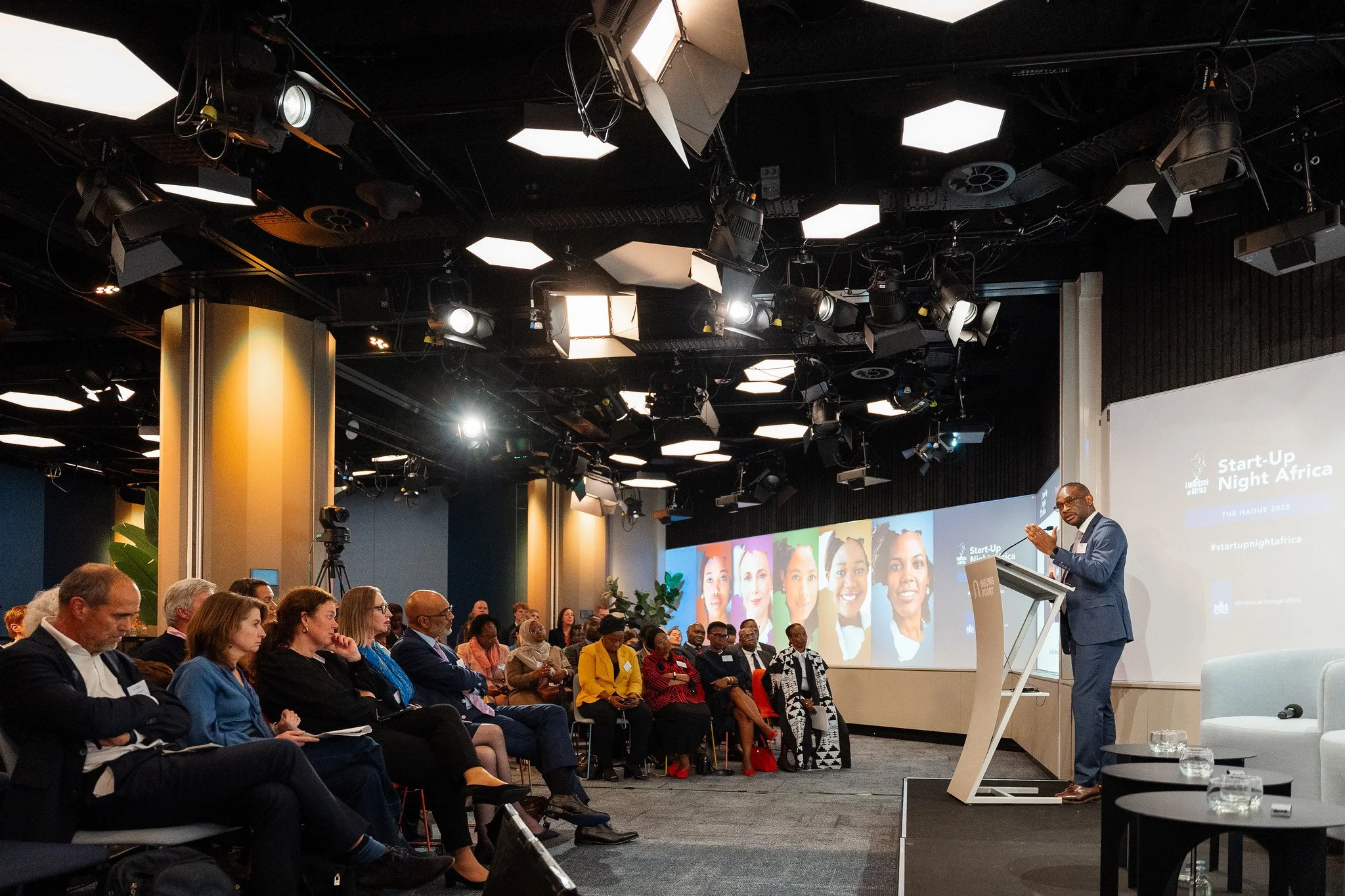
On a crisp evening in The Hague on 17 September 2025, the 3rd Start-Up Night Africa event in The Netherlands took place, hosted by Lionesses of Africa in partnership with the Ministry of Foreign Affairs. The event served as a rallying point for improving access to finance, supporting women entrepreneurs building high-growth businesses in Africa. Taking the stage, African Guarantee Fund (AGF) Group CEO Jules Ngankam delivered a message that resonated long after the applause: women are the backbone of Africa’s economies - and when their financial potential is unlocked, the continent’s growth story is rewritten.

The Paradox That Persists
Across the African continent, women participate in economic life at exceptionally high rates, yet their contribution to GDP remains disproportionately low. For Ngankam, the reason is as structural as it is solvable: informality obscures women’s contributions and depresses productivity, locking many out of formal finance and market opportunities. “Women are already the backbone of our economies, but they have not reached their full potential yet. Imagine if we unlock that potential - the African growth story will change completely.”
He points to the agriculture sector as a stark case. Women make up the majority of the labour force, yet own only 3% of the land. Policy must meet practice, he argues, by implementing reforms that allow more women to own and inherit land, along with providing practical training on navigating legal processes. Banks, in turn, should design products that help women acquire land - only then can land become usable collateral.
“Women are already the backbone of our economies… Imagine if we unlock that potential—the African growth story will change completely.”
From Risk to Trust
When only 5% of women’s loan applications are approved compared with 40% for men, trust - not talent - is often what’s missing. AGF’s answer blends finance with confidence-building: risk-sharing guarantees for banks coupled with capacity building for entrepreneurs. The principle is simple, Ngankam insists: “We’re not de-risking the credit risk; we are de-risking the bias risk. Lending to women is a good business - the NPL (non-performing loans) - is one of the lowest - and we need to institutionalise inclusion.”
AGF’s guarantee model is a bridge of trust. By covering up to 75% of the loan risk for women-focused portfolios, AGF enables banks to lend confidently and competitively. At the same time, AGF supports bond issuances to help partner institutions lower interest rates - an essential lever in markets where the cost of capital can be prohibitive for SMEs. But Ngankam insists that financial inclusion is not just about guarantees - it’s about changing mindsets. “We’re showing banks that women are not risky; they are resilient,” he explained. “And when women trust that banks believe in them, they invest that trust back into their communities.”
AGF complements this financial confidence with training for both lenders and entrepreneurs. Banks learn how to design gender-responsive loan products, while women gain the tools to strengthen their business operations through capacity building programmes - from bookkeeping and compliance to enhancing marketing and digital visibility. It’s a partnership that transforms potential into performance.
Designing Finance That Fits
Standard finance products often misread the rhythm of women-led businesses. Ngankam describes how AGF encourages lenders to “tweak” conditions: accept cash-flow or inventory-based collateral where appropriate; align repayment schedules with business cycles; and relax rigid requirements such as multi-year audited financials when verifiable transactions or contracts demonstrate performance. The goal is not to lower standards, but to calibrate them to reality so bankable women become banked women. “We ask banks to look beyond the balance sheet and see the potential in the person,” he said. AGF helps institutions adopt alternative credit models that value cash-flow histories, mobile money transactions, and purchase orders as viable indicators of business health.
These design shifts only work if there’s a pipeline of loan-ready women-owned and led businesses. That’s where partnerships come in. With organisations like Lionesses of Africa, AGF supports practical training and mentoring that covers bookkeeping, compliance, market access, and investment readiness - so banks see not just passion, but bankable propositions.
“We’re not de-risking the credit risk; we are de-risking the bias risk. Lending to women is a good business—the NPL is one of the lowest—and we need to institutionalise inclusion.”
A Billion-Dollar Signal
Over the past three years, AGF and its partners have unlocked $1 billion in financing for women entrepreneurs, channeled through 191 financial institutions across 39 African countries. It’s a figure that speaks as loudly to banks as it does to women entrepreneurs: when institutions are willing to share risk and adapt products, capital moves. At a corporate level, AGF’s footprint spans across 45 countries on the continent - evidence of a strategy built on scale and partnership.
The momentum, Ngankam notes, is especially strong in countries such as Kenya and Tanzania (East Africa); Côte d’Ivoire and Senegal (Francophone West Africa); Nigeria and Ghana (Anglophone West Africa); the DRC and Cameroon (Central Africa); and South Africa (Southern Africa). Where partnerships are deep and policy is enabling, the flywheel accelerates. Behind these numbers are stories of women entrepreneurs whose lives and businesses are being positively changed through access to funding: a grain processor in Tanzania expanding her factory, a digital designer in Lagos scaling her e-commerce platform, a solar entrepreneur in Dakar lighting up rural villages. “It’s not just about the capital,” Ngankam said. “It’s about the confidence that capital brings….Every success story is proof that collaboration and partnership work,” he said. “The more we partner, the faster we move.”
Beyond Agriculture: A Creative Surge
The agriculture sector remains a vital engine for women-owned SMEs on the African continent. Still, Ngankam sees simultaneous waves building elsewhere, in industries such as manufacturing, renewable energy, and digital services. Most striking is the creative economy - fashion, media, film, and content creation - where women are producing at scale but often operate informally. Formalisation and tailored finance could convert views and virality into sustainable enterprise value, he argues, lifting Africa’s 3% share of the global creative economy. From film studios in Lagos to fashion ateliers in Accra, women are redefining industries once considered niche. Yet many remain informal, without access to scalable finance. “Imagine if a young woman filmmaker could access credit based on her streaming revenue, or a fashion designer could secure a loan with her digital sales history - that’s the level of innovation we must reach.” AGF’s future initiatives aim to integrate women creatives into formal financial systems, ensuring that cultural production is treated as economic production. “The creative economy isn’t soft power - it’s real power,” Ngankam affirmed. “And women are at its centre.”
Digital Rails, Inclusive Reach
Technology, Ngankam insists, is the great equaliser. “Technology, I would say, is a game changer,” he said. Mobile money, digital lending platforms, and fintech partnerships are dismantling the structural barriers that have historically excluded women. “Digital lenders run lighter operations, reduce costs, and reach further,” he noted. “They save time, cut out bureaucracy, and make finance accessible to rural women who have never walked into a bank.”
AGF’s embrace of digital tools goes beyond convenience - it’s about visibility. By leveraging data analytics, AGF can demonstrate the profitability of women-led portfolios, track performance, and build confidence among investors. “What we measure, we can improve,” Ngankam said. “Data gives women a digital footprint - and that footprint opens doors.
Partnerships as an Operating System
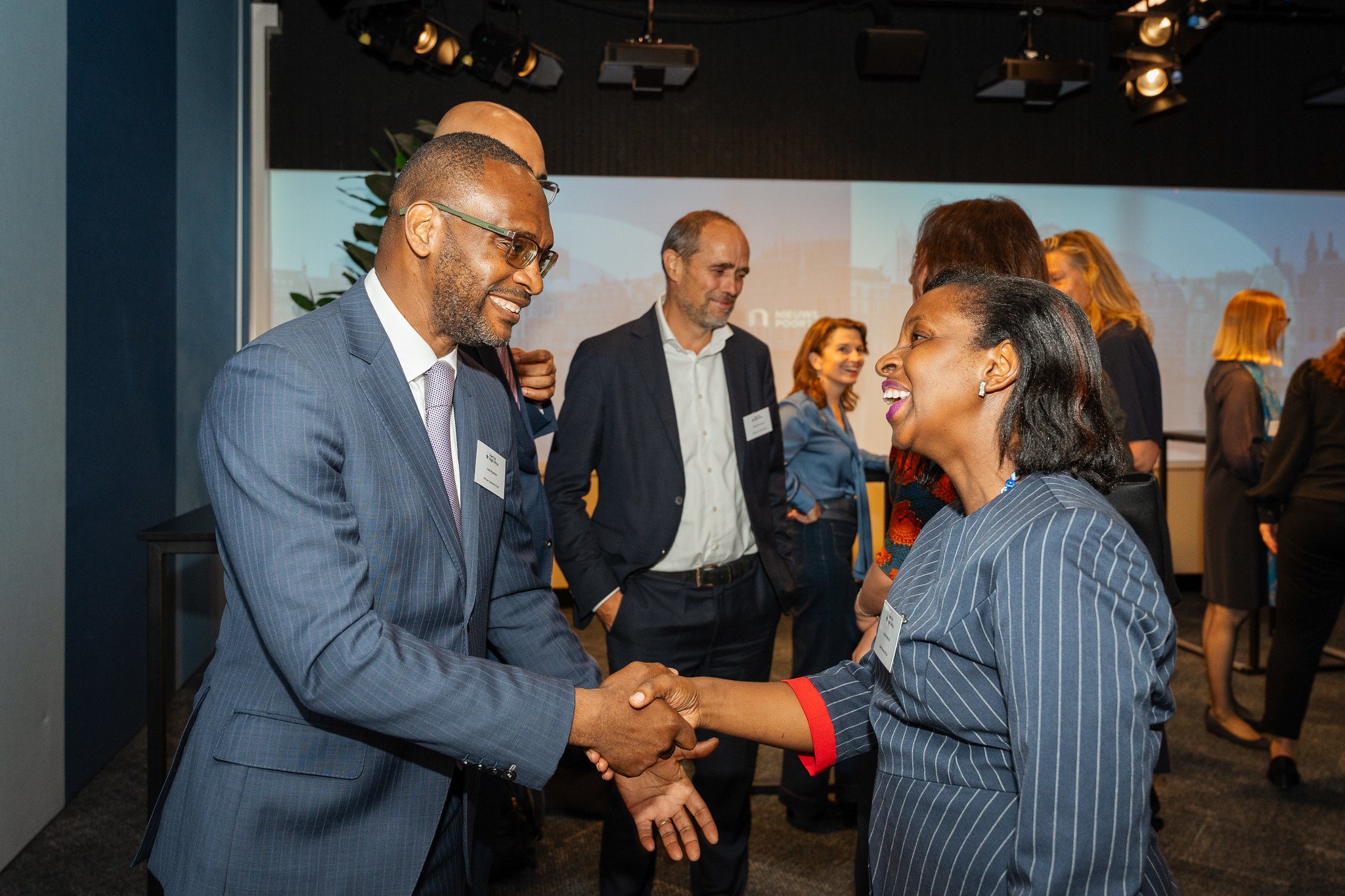
No single player can close the gender financing gap. Ngankam outlines an ecosystem approach: donors and DFIs to catalyse capital; commercial banks and MFIs to deploy it; governments and regulators to build enabling frameworks; and accelerators, incubators, and business networks—like Lionesses of Africa—to equip SMEs for scale. It’s a choreography that turns intent into impact.
AGF is expanding its circle of collaborators, from major development partners to top-tier banks in every market. The ambition is straightforward: cover more institutions in more countries, so women entrepreneurs can find a responsive lender wherever they build.
This cross-sector collaboration is also drawing in global attention. Development partners, climate funds, and international donors are joining AGF’s vision to embed gender and sustainability at the heart of African finance. “Green finance and gender finance are not parallel tracks - they intersect,” Ngankam said. “When women thrive, sustainability follows.”
“They have to formalise and scale… If we align policies, capital, and capacity building, we can move from awareness to action.”
From Awareness to Action
Ngankam’s closing message is as pragmatic as it is motivational: “Women entrepreneurs have to formalise and scale. They need to stop thinking small and instead think big. If we align policies, capital, and capacity building, we can move from awareness to action and bridge the gender financing gap.” For funders, he urges more gender-smart capital; for banks, an institutional commitment to inclusion; for governments, policies that remove friction; and for women entrepreneurs, the choice to step into visibility with investment-ready plans.
The path forward is clear. Financial institutions must embed gender-smart policies and design products that reflect the realities of women-led businesses. Donors and DFIs must scale catalytic funding to de-risk private capital. Policymakers must legislate for equality, streamline business registration, and expand property rights. And Africa’s women entrepreneurs must seize the moment - formalise their enterprises, document their growth, and claim their rightful place at the centre of the continent’s economic transformation. Because when women are financed, Africa doesn’t just grow - it flourishes.